1 product
Compact binoculars for pockets, travel and days out
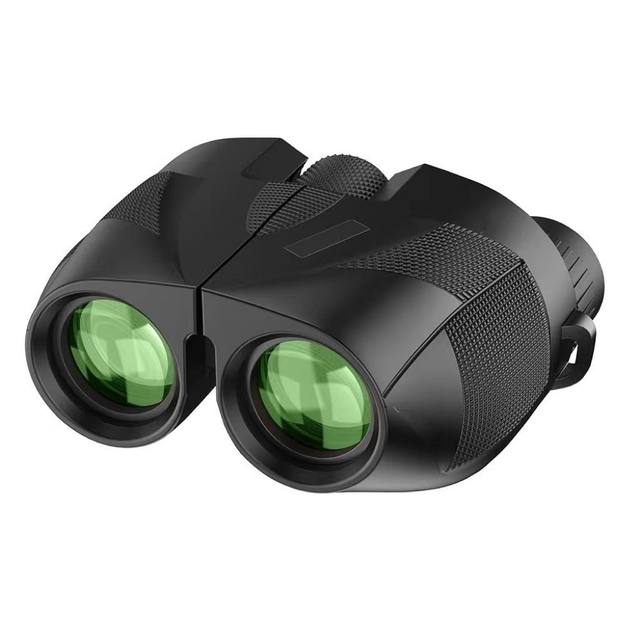
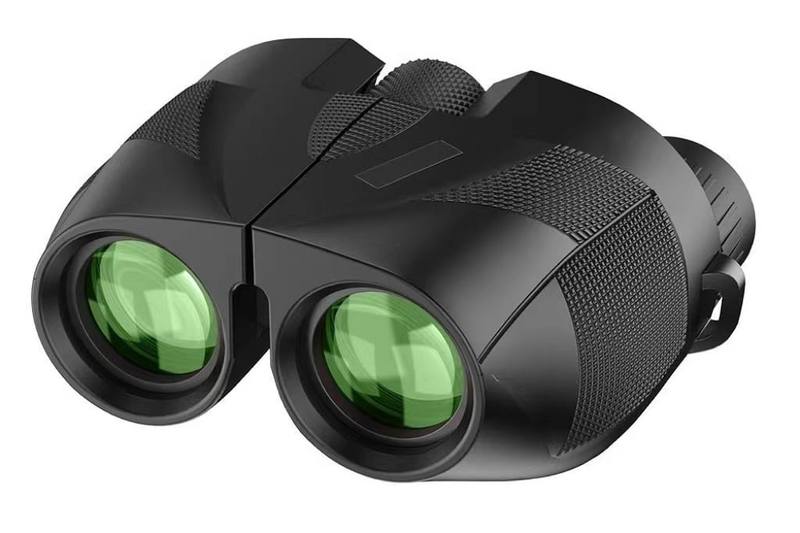
Compact binoculars use objective lenses of around 20 to 30 mm. That keeps them small and light enough to carry all day, in a pocket, a rucksack lid or a handbag. The trade-off is a smaller exit pupil, so the view dims sooner at dusk than with a full-size pair.
All products
When a compact pair makes sense
Compact binoculars are the pair you actually take with you: on a long walk where every gram counts, on holiday, to a football match or a concert, or as a spare pair in the car or the glovebox. They are also popular as a first pair for older children, because they are light and easy to hold.
What you give up
A 10x25 has an exit pupil of 2.5 mm (25 / 10). In daylight the pupil of your own eye is small, about 3 mm, so the view still looks bright. In the last hour of daylight, in dense woodland or at night, your pupil opens wider and a full-size 8x42 with a 5.25 mm exit pupil shows clearly more. Smaller eyepieces also tend to mean a smaller sweet spot, so take a moment to line the binoculars up with your eyes. Compact or full-size binoculars? compares the two in detail.
Compact binoculars for children
Children often find full-size binoculars too heavy. Before you buy a compact pair for a child, check two things. First, the hinge must close far enough for their eyes: the distance between the centres of the eyepieces has to match the distance between their pupils. Second, a lower magnification is easier to hold steady. Show them how to set the focus wheel and the dioptre on the right eyepiece once, and they will get far more out of a walk.
For birdwatching and dusk walks, also look at our full-size binoculars.
Guides on this topic
Buying advice
Compact vs full-size binoculars: which should you carry?
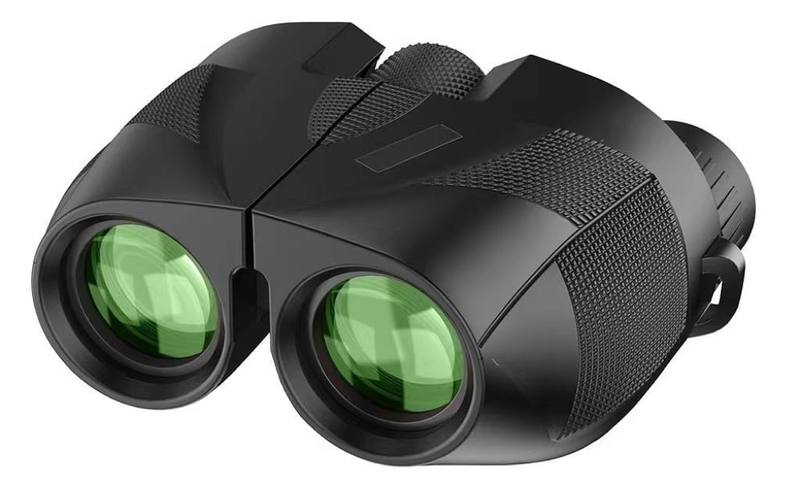
Compact or full-size binoculars? How 25 mm and 42 mm lenses differ in brightness, field, steadiness and weight, and which suits walks, travel and dusk.
Frequently asked questions
Are compact binoculars good for birdwatching?
They work well in good light and for birds that are not too far away, and they are easy to carry, so they get used more. In poor light, in woodland and at dusk, a full-size 8x42 or 10x42 gives a brighter view because of its larger exit pupil.
What is the difference between 8x21 and 10x25 binoculars?
An 8x21 magnifies eight times through 21 mm lenses, a 10x25 ten times through 25 mm lenses. Both have small exit pupils (2.6 mm and 2.5 mm), so they are best in daylight. The 8x21 is usually a little smaller and easier to hold steady, the 10x25 shows a little more detail.
Are compact binoculars suitable for children?
Often yes, because they are light. Check that the eyepieces can be brought close enough together for a child's eyes, and that the child can reach and turn the focus wheel comfortably. Teach them never to look at the Sun through binoculars.