1 product
Monoculars for walks, travel and quick looks
A monocular is a single telescope that you hold to one eye. It weighs a fraction of a pair of binoculars and slips into a jacket pocket, which makes it handy for walkers, travellers and anyone who wants a quick look at a distant sign, boat or bird.
All products
Monocular or binoculars?
Two eyes see more comfortably than one. With binoculars your brain merges two images, which feels relaxed over long sessions and gives a sense of depth. A monocular is lighter, quicker to raise with one hand and easier to carry everywhere. For long sessions of birdwatching, choose binoculars. For the occasional look on a walk, at a match or while travelling, a monocular does the job in a fraction of the space.
How zoom monoculars work
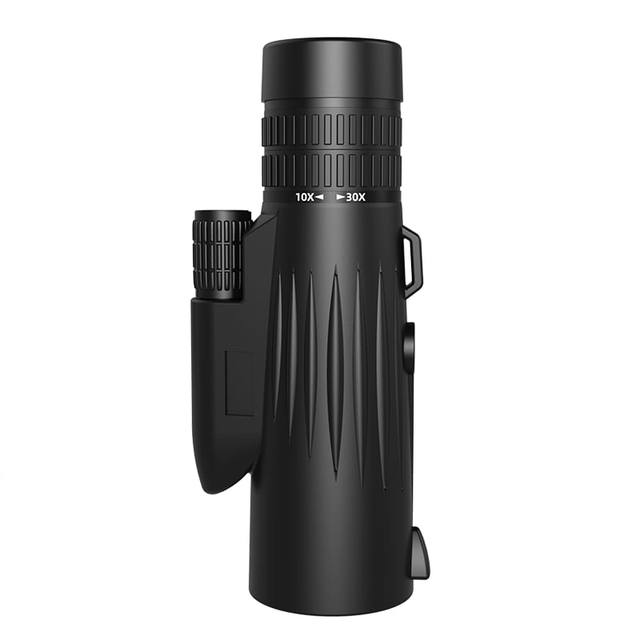
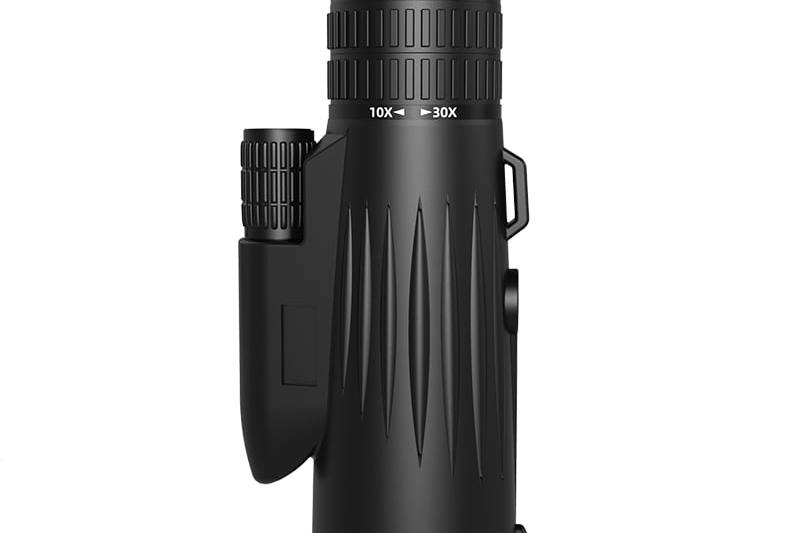
A zoom monocular changes magnification with a ring near the eyepiece, for example from 10x to 30x. Low power gives the widest and brightest view, so start there to find what you want to look at, then turn the ring up for more detail. At the top of the range the exit pupil is small (42 / 30 = 1.4 mm) and every movement of your hand is magnified too. The high settings work best in good light, with the monocular braced against a post, a wall or on a small tripod.
Reading the numbers
10-30x42 means a magnification from 10x to 30x through a 42 mm objective lens. The exit pupil is 4.2 mm at 10x and 1.4 mm at 30x. What the numbers on binoculars mean explains how this changes the view.
Looking for a monocular that works in the dark? Our night vision range includes a digital night vision monocular.
Frequently asked questions
Is a monocular as good as binoculars?
For quick looks it does the same job, and it is lighter and smaller. For long sessions binoculars are more comfortable, because both eyes work together and you get a sense of depth. Many walkers carry a monocular for convenience and keep binoculars for dedicated birdwatching.
What does 10-30x42 mean on a monocular?
The magnification can be set from 10x to 30x, and the objective lens is 42 mm across. Dividing 42 by the magnification gives the exit pupil: 4.2 mm at 10x, 1.4 mm at 30x. The view is brightest and steadiest at the low end of the zoom.
Do I need a tripod for a monocular?
Not at low magnification. At 20x and above, hand shake becomes obvious, so lean on something solid or use a small tripod if the monocular has a tripod thread.